
MENU
SEATELSAT JOURNAL / COMMUNITY WORK
Connectivity opens doors.
Books help minds walk through them.
During Rural School Connectivity Mini Project site visits in Gorontalo and Jeneponto, SEATELSAT CEO Amit Vithlani donated books to local schools—supporting learning alongside the expansion of digital access.
01 / AT THE SCHOOL
Books that open
possibilities.
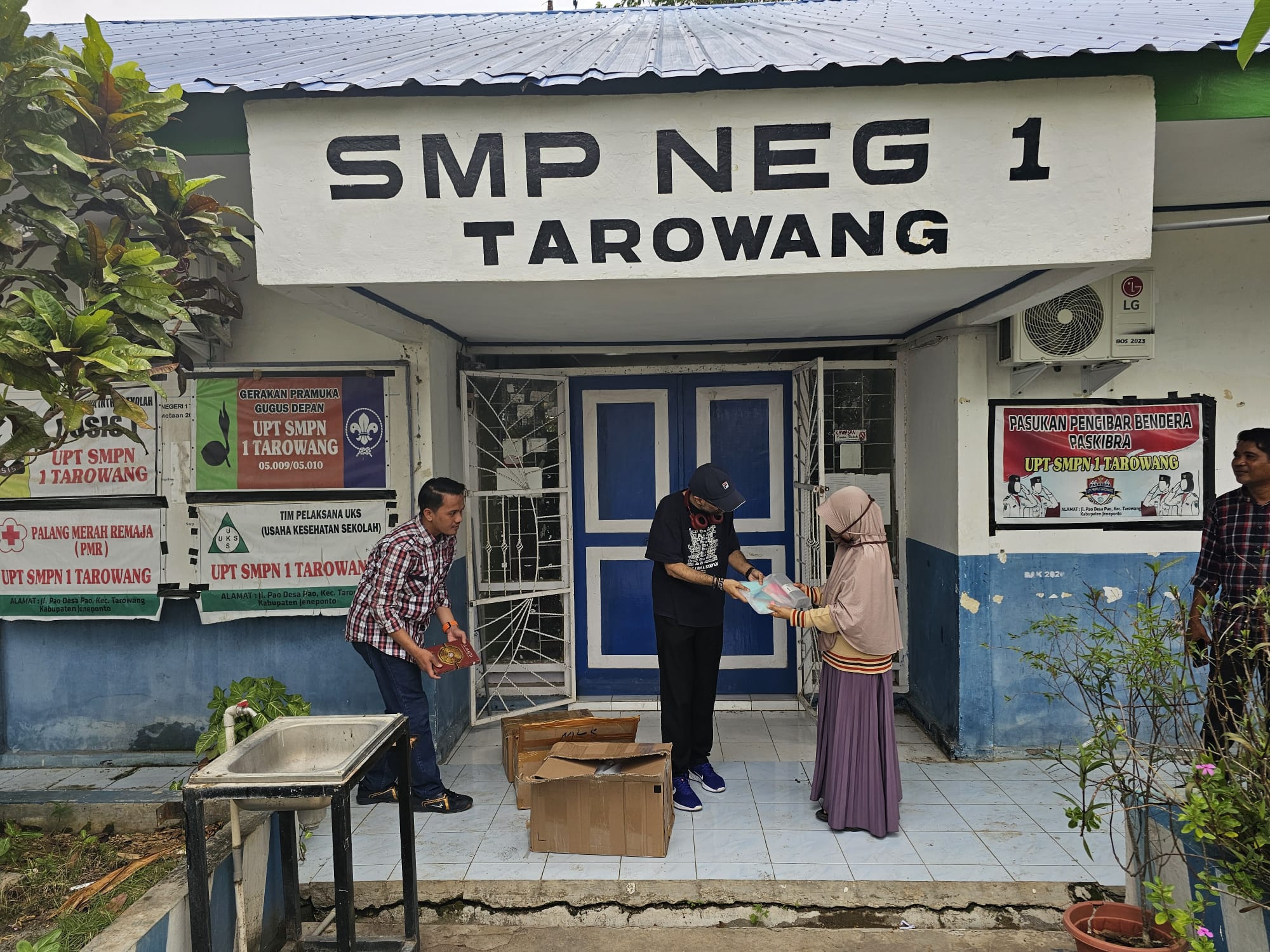
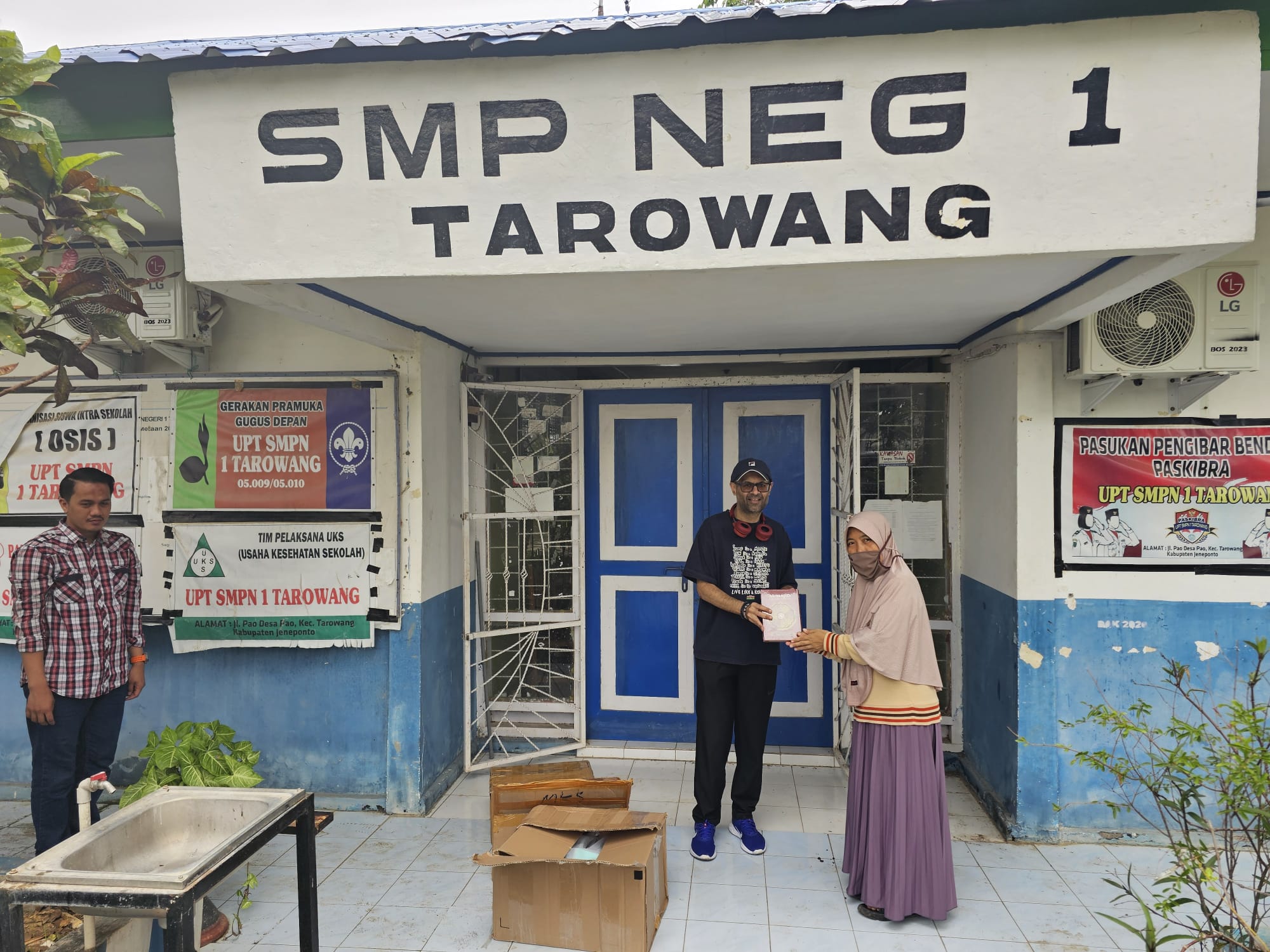
At the entrance to SMP Negeri 1 Tarowang, the story of connectivity takes a different form. Beneath the school’s sign, books pass from one pair of hands to another. The photographs show a modest, direct contribution to the place where learning happens every day.
The book donation formed part of SEATELSAT CEO Amit Vithlani’s visits to local schools during the Rural School Connectivity Mini Project programme in Gorontalo and Jeneponto. Alongside work to extend digital access, the visits included support for another kind of access: the opportunity to pick up a book and begin reading.
It is a small scene within a wider infrastructure story, but it brings the purpose of that work into focus. Networks connect places. Learning resources help people make use of the possibilities those connections can create. Both belong in a conversation about opportunity.
02 / BEYOND THE CONNECTION
A connected school
is a beginning.
Technology projects are often described through their equipment: the link that reaches a site, the network that distributes a service, the devices that bring it within reach. These are essential foundations. In a school, however, the reason for building them sits beyond the network itself.
The Rural School Connectivity Mini Project explores how low-band connectivity can extend local access around an existing satellite connection. That technical work addresses the reach of a service. The donation of books addresses something complementary: the learning material available within the school.
Seen together, the two activities offer a broader view of access. A digital connection can provide a route to information and services. A physical book offers a resource that can be held, shared and revisited. Each contributes in a different way to the environment in which learning takes place.
03 / A BOOK REMAINS
Something to hold.
Something to return to.
A book has a particular place in a connected world. Its pages do not need a login or a charged device. A reader can pause, turn back and spend time with an idea at their own pace. In a school, that simple availability matters alongside the growing range of digital resources.
The contribution documented here is straightforward: books donated to local schools. Their value begins with being available for learning. A printed resource can sit beside a lesson, prompt a question or introduce a subject a reader wants to explore further.
There is no need to place print and technology in competition. Learning can move between them. A topic encountered on a page may lead to further investigation online; information found through a connection may become the starting point for a classroom conversation. The opportunity lies in giving learners more ways to engage.
For a company working on connectivity, this is a useful perspective to keep close. The quality of access depends on more than whether a signal reaches a building. It also concerns what people can find, understand and use when they are there.
04 / COMMUNITY CONNECTION
Being present
changes the perspective.
A site visit brings an infrastructure programme into its local setting. The school is no longer only a point on a network plan. It is a place with an entrance, classrooms and people whose daily routines give the project its meaning.
The visits created space to listen, learn and contribute directly. Donating books placed a practical act of support alongside the technical purpose of the programme, connecting the work of expanding access with the school’s continuing role in education.
The photographs preserve that connection without needing a grand claim. They show a handover at a school, with the books and the people involved in the same frame. It is a reminder that community work is made tangible through specific actions in specific places.
05 / LASTING VALUE
A practical contribution
to learning.
The donation complements SEATELSAT’s connectivity work with support that is immediate and tangible. Books add learning resources beyond the connected classroom; visits bring the project closer to its community context; infrastructure creates possibilities that people can put to use.
Those contributions operate at different scales, but they share a purpose. Education needs places to learn, material to learn from and routes to a wider world of knowledge. Supporting one part of that environment can make sense alongside work on another.
This story is one part of the Rural School Connectivity Mini Project’s wider narrative. The technical story follows local access, integration and field evidence. The community story brings attention back to the people and institutions at the centre of that effort.
At SMP Negeri 1 Tarowang, that wider ambition is expressed through a simple exchange: books delivered to a school. A practical contribution, made alongside a connection to a larger world.
Access to knowledge
Books add lasting learning resources beyond the connected classroom.
Community connection
Site visits create space to listen, learn and contribute directly.
Lasting value
Infrastructure matters most when it strengthens everyday opportunity.
CONTINUE READING / THE INITIATIVE BEHIND THE VISIT
From a school connection
to a wider opportunity.
Explore the Rural School Connectivity Mini Project: the approach to extending local access, the implementation journey and the field evidence behind the initiative.