
MENU
INITIATIVES / MISSION-CRITICAL PLATFORM MINI PROJECT
From individual components
to one integrated platform.
Inside the Jakarta laboratory programme: connecting devices, network infrastructure and command tools—and completing the first mission-critical platform call.

01 / THE PURPOSE
When coordination matters,
every layer must connect.
For a team responding to an incident, communication is experienced as a single action: reach a colleague, share information, coordinate the next move. Behind that action sits a chain of devices, radio access, core infrastructure and applications. Each part has to work with the others.
The Mission-Critical Platform Mini Project brings that chain into one laboratory environment. Its purpose is to establish a connected foundation for the services that public safety, emergency response and other critical operations depend on.
For SEATELSAT, this begins with integration. Bringing components together creates a practical setting in which the team can observe the complete communication path, measure its behaviour and decide what needs to improve before the next stage.
- The initiative
- Mission-Critical Platform Mini Project
- The environment
- Controlled laboratory programme in Jakarta
- The milestone
- End-to-end integration and the first platform call
- The direction
- Field validation toward operational readiness
02 / INSIDE THE LABORATORY
Progress begins
with people working together.
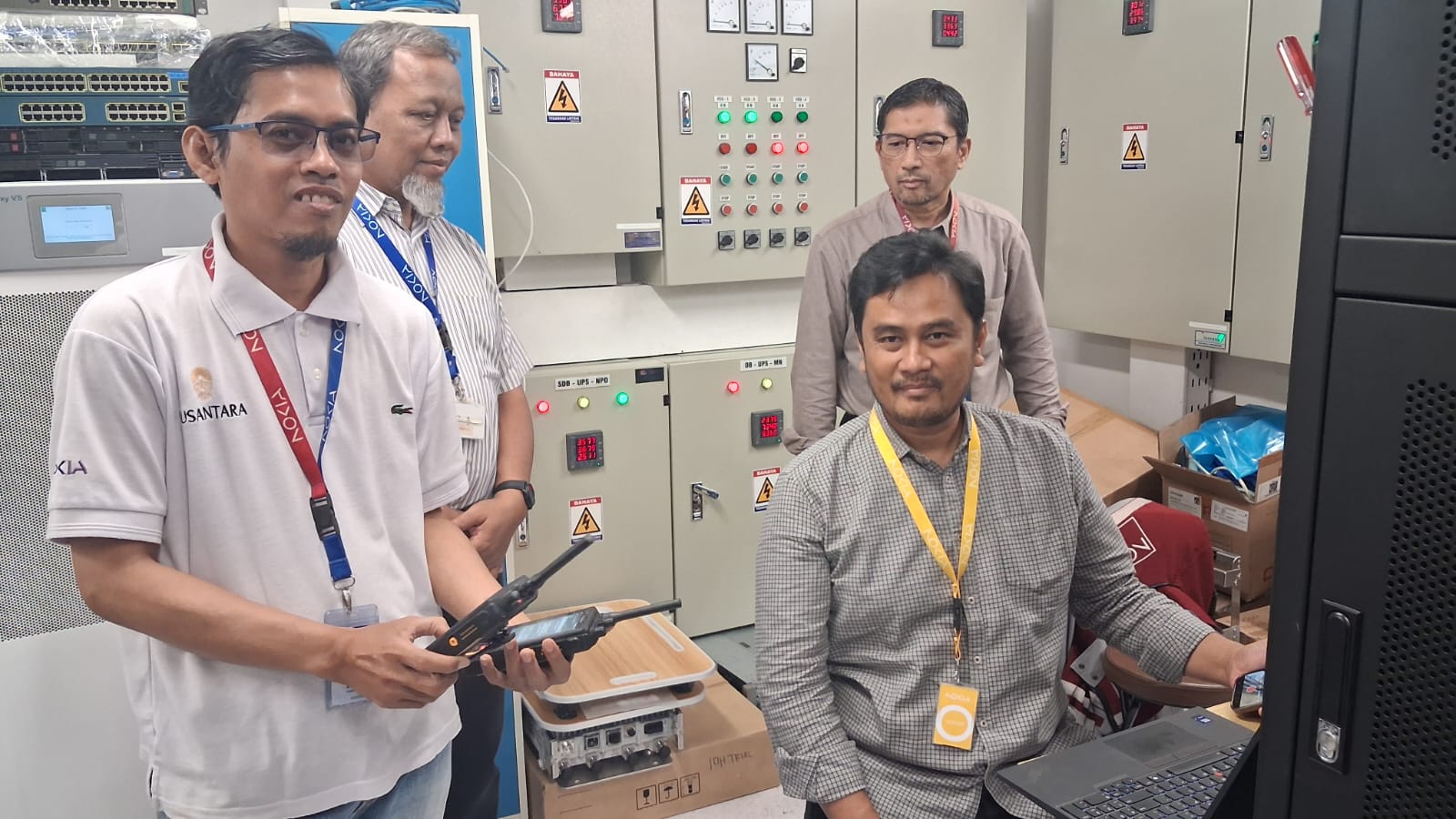
The work in Jakarta is a collaboration with Nokia, bringing SEATELSAT and Nokia engineering teams together around a shared integration task. The laboratory provides a controlled place to connect infrastructure, inspect behaviour and refine the configuration.
Alongside equipment racks and workstations, operational devices give the programme a tangible focus. A handheld terminal and a dispatch console represent different ends of the same service: the user in the field and the team coordinating the response.
Working across these layers helps turn separate technical activities into a common programme. The objective is a communication environment that can be assessed as a whole, with each stage informing the work that follows.
03 / CONNECTING THE COMPLETE CHAIN
Five layers.
One end-to-end environment.
The integration milestone connected the essential layers of the platform, from operational devices through the private radio network and core infrastructure to the mission-critical application environment and command tools.
This matters because a working component alone does not establish a working service. Subscriber connectivity, network control, application access and user workflows need to align across the complete path.
- 01
Operational devices
Handheld terminals and the users who initiate communication.
- 02
Private radio network
Radio access and subscriber connectivity across the configured environment.
- 03
Core infrastructure
Core control and the service infrastructure supporting the connection.
- 04
Mission-critical platform
The application environment carrying mission-critical communication.
- 05
Command & coordination
Dispatch tools and operational workflows at the coordination end.
The chain represents the integrated laboratory environment. Field coverage, resilience and operational acceptance are separate validation stages.
04 / THE INTEGRATION MILESTONE
A first call.
A connected foundation.
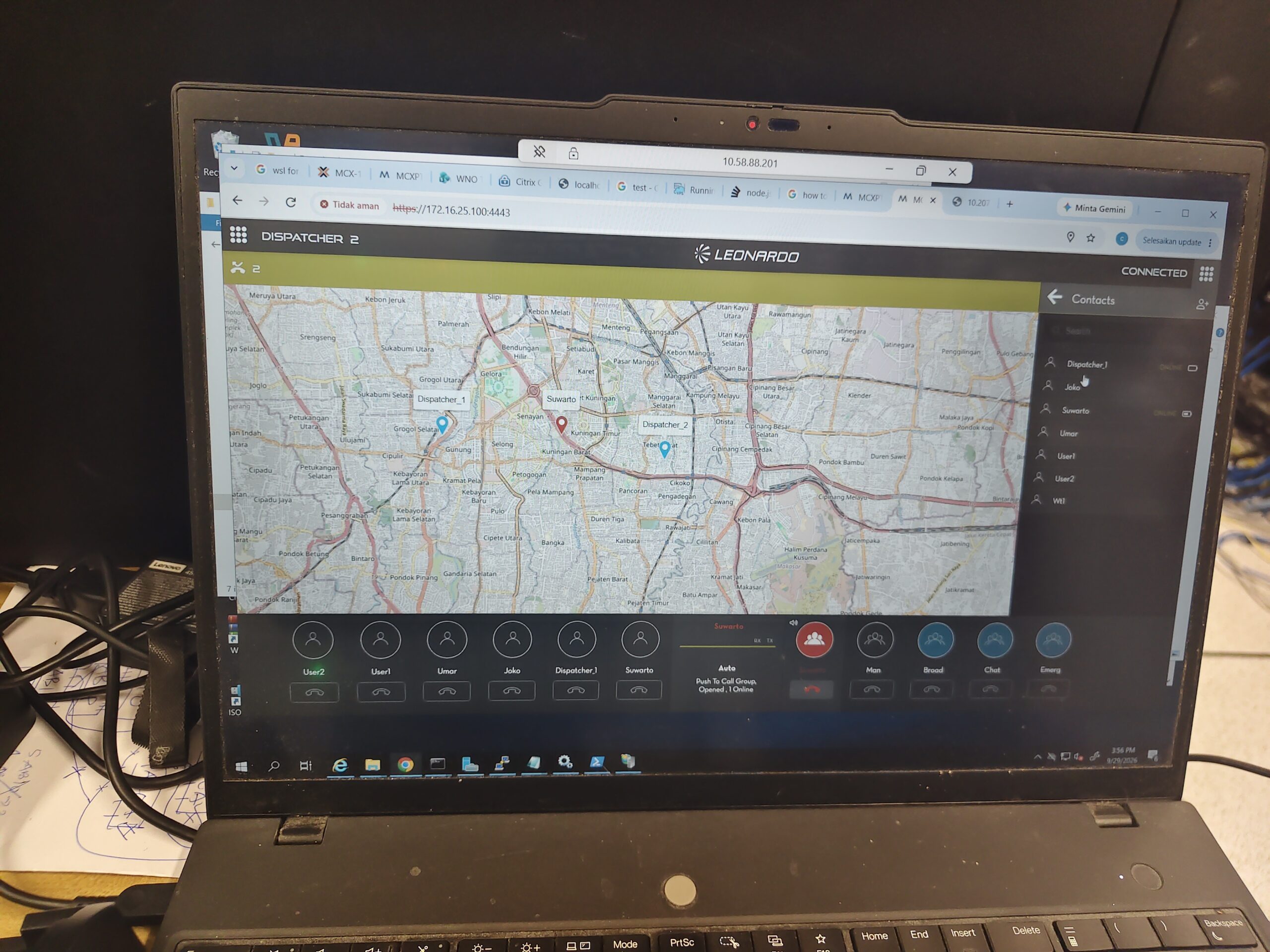
Completing the first mission-critical platform call marked the point at which the individual layers became a functioning end-to-end communication environment. It was a concrete integration milestone: the configured chain could support communication through the platform.
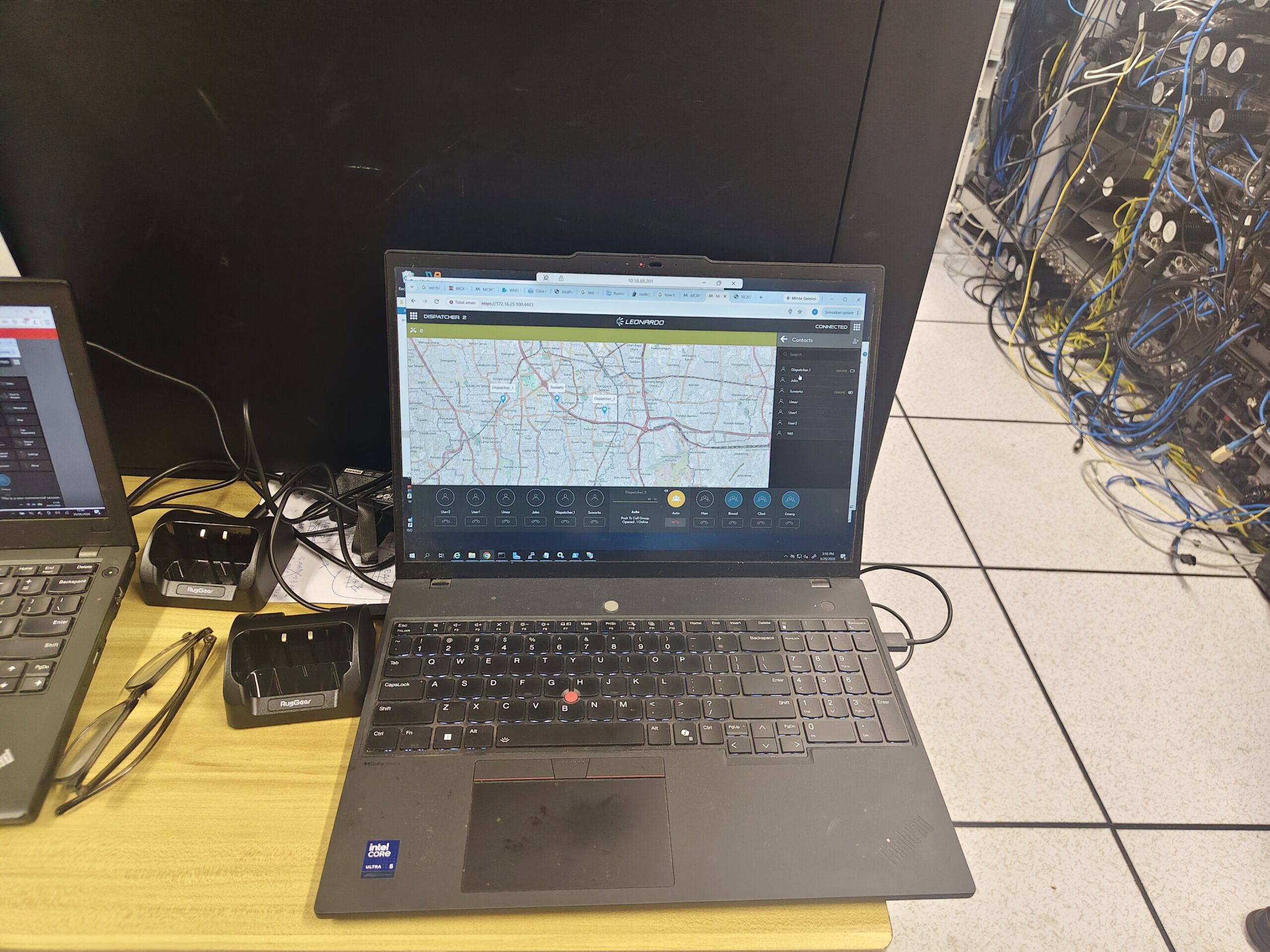
At the command end, the application environment brings coordination into view. At the device end, the same programme connects the tools a field user would hold. Bringing those perspectives together is the reason for validating the complete path.
The milestone establishes a foundation for the next questions. How consistently does the environment perform? What configuration changes improve service quality? How will the integrated platform behave when it leaves controlled laboratory conditions?
END-TO-END INTEGRATION · FIRST PLATFORM CALL · JAKARTA LABORATORY
Integrated in the laboratory. Ready for the next stage of validation.
05 / CONTROLLED LABORATORY RESULTS
Measured end to end.
Optimised for the field.
With the environment connected, measurement gives the programme a baseline for improvement. The controlled Jakarta laboratory recorded download and upload throughput alongside latency and jitter, allowing the team to consider both data capacity and communication responsiveness.
These measurements describe the configured laboratory setup at this stage. They provide a shared reference for quality optimisation and help guide the next validation activities.
Download
27.4 Mbps
Recorded download throughput
Upload
8.9 Mbps
Recorded upload throughput
Latency
29 ms
Recorded communication delay
Jitter
4 ms
Recorded variation in delay
Measurement scope: Results were measured in the controlled Jakarta laboratory and relate to the configured laboratory setup. They are not final field-performance commitments. Formal operational compliance remains subject to field validation and service-level acceptance.
06 / REFINING THE ENVIRONMENT
A baseline for
continuous improvement.
A successful call is a milestone, while consistent service quality requires continued work. SEATELSAT and Nokia engineering teams continue tuning the integrated environment, using the laboratory baseline to guide optimisation.
The programme keeps integration, measurement and readiness in sequence. The connected environment makes measurement possible; those results support refinement; field validation will then assess how the service behaves in representative operating conditions.
This approach keeps the next stage grounded in evidence. The controlled-lab quality baseline supports progression toward service-quality objectives, while operational acceptance remains a later decision.
End-to-end integration
The essential layers are connected across the laboratory environment.
Performance measurement
A controlled-lab baseline has been recorded.
Quality optimisation
SEATELSAT and Nokia engineering teams continue configuration tuning.
Field validation
Evaluate coverage, resilience, mobility and operational workflows.
07 / THE NEXT STAGE
From laboratory integration
toward operational readiness.
The next stage is to move the integrated platform into real operating conditions. Field validation will evaluate service performance, resilience and workflows beyond the controlled environment, building a clearer picture of what operational use requires.
That work needs to consider where teams operate, how they move and how command and field users coordinate. A service that functions in a laboratory must still be evaluated against the conditions and expectations of its intended environment.
Coverage
Assess service reach across representative environments.
Service quality
Evaluate consistency and the experience of users.
Resilience
Assess behaviour under demanding or disrupted conditions.
Mobility
Evaluate communication as teams move between locations.
Workflows
Validate coordination between command teams and field users.
THE DIRECTION
Building the foundations
for critical services.
The Mission-Critical Platform Mini Project is a step toward supporting Indonesia’s public safety, emergency response and critical services. Its value lies in connecting a complete environment, documenting the laboratory baseline and defining the work still ahead.
Laboratory integration is complete. Field validation is next. Operational readiness is the direction—supported by measured progress, continued optimisation and service-level acceptance.